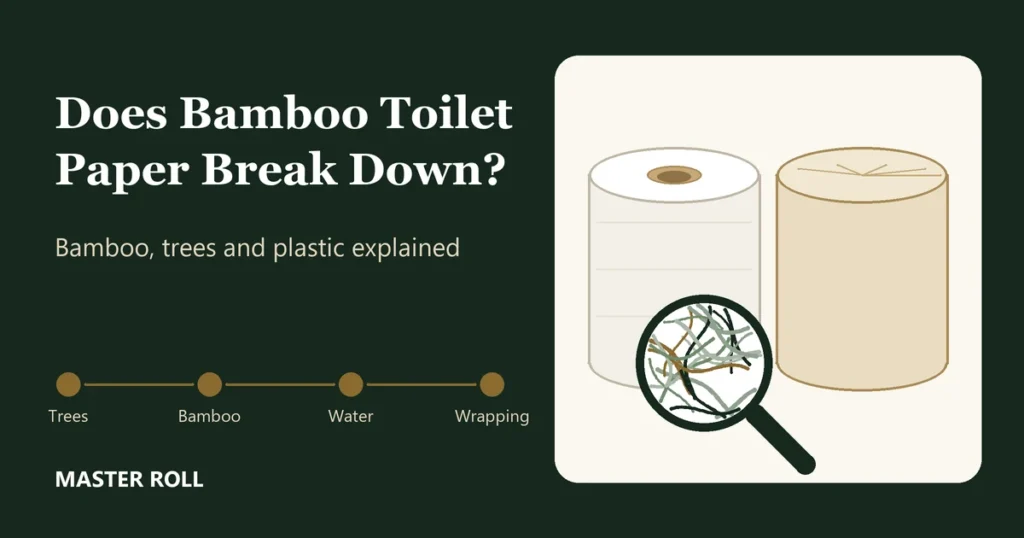
The short answer: yes, bamboo toilet paper breaks down. Like other toilet paper, it is designed to lose its strength in water and break up after flushing, unlike wet wipes. Its other differences are the fibre (a fast-growing grass rather than trees) and, for Master Roll, paper wrapping instead of plastic film.
When it comes to toilet paper, most people don’t think twice about how it affects the environment. Bamboo toilet paper like Master Roll uses a different fibre and, in our case, different packaging. Here’s what that does and doesn’t change.
Is Toilet Paper Made From Trees?
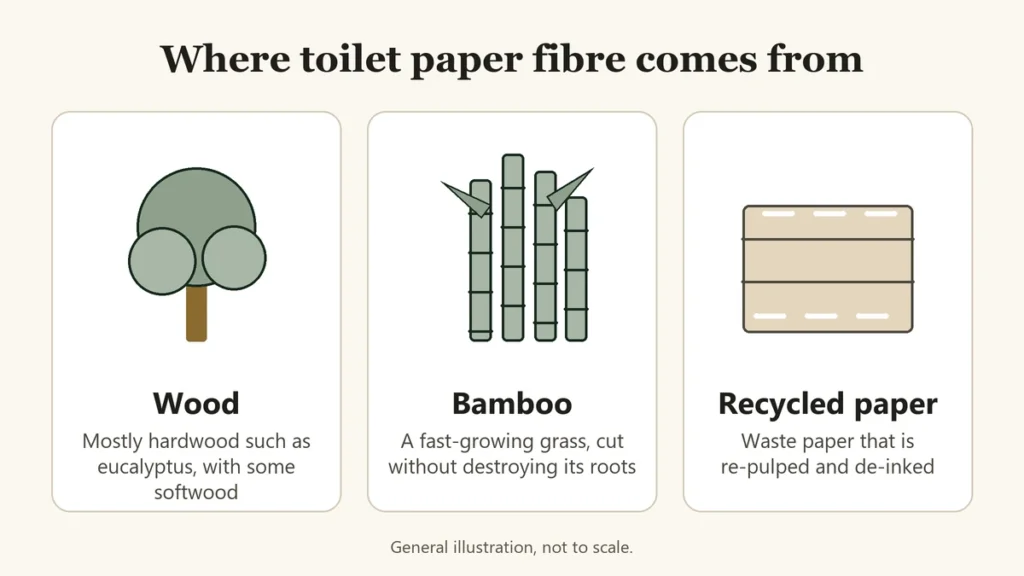
Much of it is. Conventional toilet paper is commonly made from virgin wood pulp, often eucalyptus hardwood blended with some softwood, while other rolls use recycled paper. Where that wood comes from matters: pulp from well-managed plantations is very different from pulp linked to the loss of natural forest. Most toilet paper is also bleached, and many multipacks come wrapped in plastic film.
How Is Bamboo Different?
Bamboo is a grass, not a tree. It grows quickly (some species can grow up to about 40 cm a day at peak growth), and its stems can be cut without killing the plant, so a managed stand regrows without being replanted. According to the UN Food and Agriculture Organization (FAO), commercially important species can be harvested about four times as often as most eucalyptus.
That doesn’t make every bamboo roll greener, though. Some bamboo plantations were created by clearing primary forest, and the energy used at the mill and the distance the paper travels matter too. Whether bamboo tissue has a lower footprint overall depends on how and where it is made.
Does Bamboo Toilet Paper Break Down?
Yes. Toilet paper is made to lose most of its strength once it’s wet, so it breaks up after flushing, and bamboo toilet paper is no exception. That’s the key difference from wet wipes, which are made to stay strong when wet: in a Water UK study of sewer blockages, wipes made up about 93% of the material.
After that, toilet paper is plant fibre (cellulose), which microbes break down over time. How long that takes depends on conditions such as temperature, moisture and oxygen, so we don’t put a timescale on it. Whatever paper you use, flush only the 3Ps (pee, paper and poo), as UK water companies advise. Our guide to whether toilet paper is biodegradable compares bamboo with other paper in more detail.
Bamboo and Plastic: What About the Packaging?
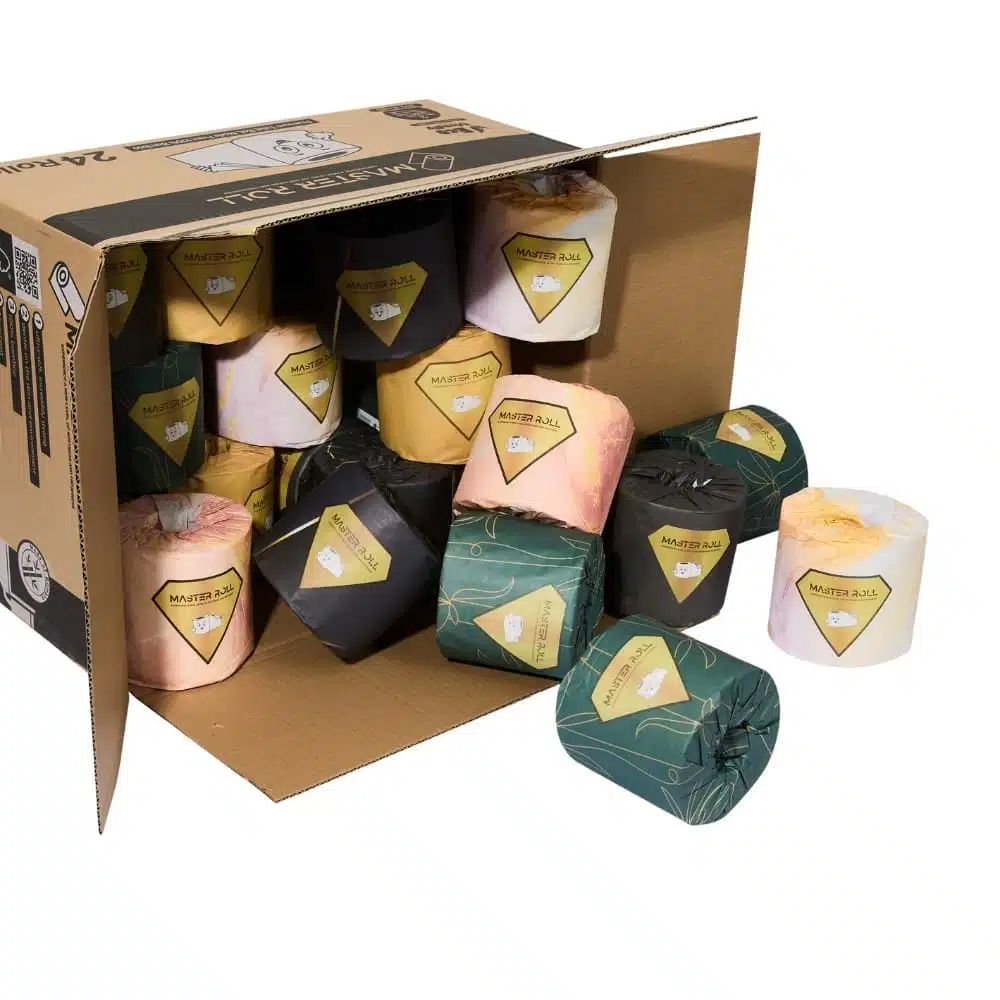
If you’re like most of us, you’ve noticed how much plastic packaging comes home with the shopping, and many toilet roll multipacks are wrapped in plastic film. Master Roll takes a different approach: each roll is individually wrapped in paper rather than plastic film.
If you’d rather avoid plastic film, paper-wrapped rolls are an easy swap, although packaging is only one part of a roll’s overall footprint.
What About Softness and Strength?
How soft and strong a sheet feels comes from the whole recipe: the fibre blend, the creping on the tissue machine and the number of plies. Master Roll is 3-ply, with 300 sheets on every roll, unscented with no added fragrance or dyes, and bleached without elemental chlorine (ECF). You can see how each step works in our guide to how toilet paper is made.
Small Choices That Add Up
The choices we make as shoppers do add up. Choosing a brand that’s clear about its fibre and how it’s made, picking paper packaging over plastic film and using only what you need all help.
Conclusion
Bamboo toilet paper breaks up in water like any other toilet paper, comes from a fast-growing grass that regrows after harvest and, with Master Roll, arrives with each roll wrapped in paper rather than plastic film. Whether it’s greener overall depends on how and where it’s made, and we look at both sides in the environmental impact of regular toilet paper vs bamboo.
Ready to try it? Our bamboo toilet rolls come in 24- and 48-roll packs, with free UK delivery.