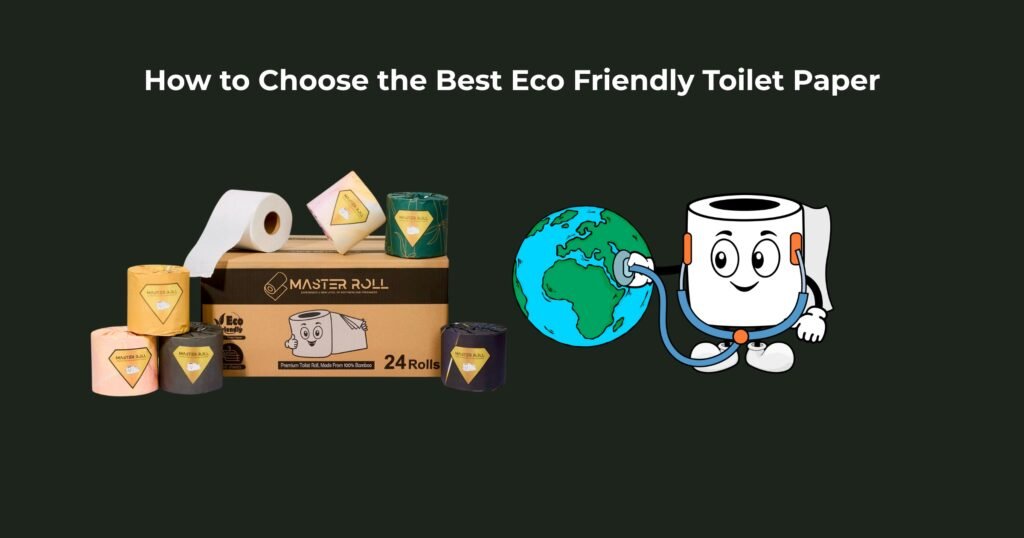
The short answer: the best eco-friendly toilet paper for most UK homes is made from a renewable or recycled fibre, bleached without elemental chlorine (ECF) or with no chlorine at all (TCF), wrapped without plastic, and good value per sheet rather than per roll. The checklist below covers each point, followed by a worked price-per-sheet example and answers to common questions.
With so many options – bamboo, recycled, 2-ply, 3-ply, wrapped or unwrapped – it can be hard to know what actually matters. Here is how to compare them.
Quick checklist: how to compare eco-friendly toilet paper
| What to check | What to look for | Master Roll |
|---|---|---|
| Fibre | Bamboo, recycled paper or virgin wood pulp, stated clearly | Bamboo |
| Bleaching | ECF (no elemental chlorine) or TCF (no chlorine compounds) | Bleached without elemental chlorine (ECF) |
| Additives | Unscented, with no added dyes or printed patterns | Unscented, no added dyes |
| Packaging | Paper or card instead of plastic film | Each roll wrapped in paper |
| Ply and sheets | Layers per sheet and sheets per roll | 3-ply, 300 sheets per roll |
| Price per sheet | Pack price ÷ total sheets | About 33p (24 rolls) or 24p (48 rolls) per 100 sheets at current prices |
1. Check the fibre: bamboo or recycled?
Most eco-friendly toilet papers are made from bamboo or recycled paper, instead of the virgin wood pulp used for most conventional rolls.
- Bamboo toilet paper (like Master Roll) is made from a grass. Its stems can be cut without destroying the roots, so a managed stand regrows and can be harvested repeatedly. According to the UN Food and Agriculture Organization (FAO), commercially important species usually mature in four to five years.
- Recycled toilet paper reuses waste paper, which reduces demand for new pulp. Its fibres bond less well, so it tends to be less soft.
Neither is automatically the greener choice. In NRDC’s 2025 US scorecard, the top grades went to products with high recycled content, and NRDC says bamboo from plantations created by clearing primary forest should be avoided. Labels can also mislead: in 2024 Which? found that some toilet papers sold as bamboo were made mostly of wood. Choose a brand that is clear about its fibre, and see how regular toilet paper compares with bamboo for more detail.
2. Check how it is bleached and what is added
Most toilet paper is whitened during pulping. Look for one of these terms:
- ECF (elemental chlorine free) – bleached with chlorine dioxide instead of chlorine gas.
- TCF (totally chlorine free) – no chlorine compounds are used at all.
- Unbleached – the pulp is left its natural colour.
If you prefer fewer additives, also look for rolls that are fragrance-free and free from added dyes and inks. Master Roll, for example, is unscented, bleached without elemental chlorine and free from added dyes. Our guide to how toilet paper is made explains each step, including bleaching.
3. Look for Certifications
Certifications give you peace of mind that what you’re buying is genuinely eco-friendly.
Here are a few to look for:
- FSC Certified (Forest Stewardship Council) – ensures responsible sourcing.
- Vegan-friendly – no animal-derived ingredients or testing.
- Plastic-free packaging – avoids unnecessary waste.
Always check the label or product description, and look for a certificate or licence number you can check with the certifier. Master Roll doesn’t currently claim any of these certifications; what we can tell you is how our rolls are made and packed, as set out in the checklist above.
4. Consider the packaging
It’s not just about what’s in the roll – it’s about what’s around it. Many conventional toilet papers are wrapped in plastic film, which often ends up in landfill. Instead, choose toilet paper that comes in:
- Plastic-free packaging
- Recyclable paper or card
- Individually wrapped rolls, for hygiene and convenience
Master Roll toilet paper is individually wrapped in paper rather than plastic film. If a roll drops on the bathroom floor, the wrapper helps keep it clean.
5. Choose the right ply and sheet count
Ply is the number of layers in each sheet.
- 1-ply is thinner and less absorbent, and often used in public toilets.
- 2-ply offers a balance of strength and softness.
- 3-ply (like Master Roll) combines three layers in each sheet, so it usually feels thicker and stronger.
Also check the sheet count per roll. Rolls can look similar but hold very different numbers of sheets. Master Roll has 300 sheets per roll. For more on what to look for, see what makes a high-quality toilet roll.
6. Compare the price per sheet, not per roll
Pack sizes, roll sizes and ply vary, so the price of a pack tells you little on its own. To compare fairly, work out the price per 100 sheets:
Price per 100 sheets = pack price ÷ (number of rolls × sheets per roll) × 100
Here is the calculation for Master Roll’s two packs at their prices on 14 October 2026. Prices can change, so check the product page for today’s price.
| Pack | Pack price | Total sheets | Price per 100 sheets | Price per roll |
|---|---|---|---|---|
| 24 rolls | £23.99 | 24 × 300 = 7,200 | £23.99 ÷ 7,200 × 100 = 33p | about £1.00 |
| 48 rolls | £34.99 | 48 × 300 = 14,400 | £34.99 ÷ 14,400 × 100 = 24p | about 73p |
At these prices the 48-roll pack works out about 27% cheaper per sheet. Buying 48 rolls as two 24-roll packs would cost £47.98, which is £12.99 more than one 48-roll pack.
Use the same method to compare other brands, and remember that sheet size and ply differ too: a 2-ply sheet is not the same as a 3-ply one.
Which pack size is right for you?
- 24 rolls – a good starting point if you are trying bamboo toilet paper for the first time, live in a smaller household or have limited storage space.
- 48 rolls – our lowest price per sheet, and fewer orders to place if you have a larger household and room to store a bulk pack.
Both are the same 3-ply bamboo roll, with free UK delivery on every order. If they are not right for you, you can return unopened packs within 30 days of delivery for a full refund, with free returns (see our returns and refunds policy). Compare both packs side by side.
7. Choose a Trusted Brand
There are many greenwashing products on the market brands that look eco-friendly but aren’t truly sustainable behind the scenes.
Look for a brand that:
- Is transparent about its sourcing and manufacturing
- Shares details about its eco commitments
- Is backed by real customer reviews
Master Roll is a UK-based brand offering premium bamboo toilet paper: 3-ply, 300 sheets a roll, unscented with no added dyes, bleached without elemental chlorine (ECF) and individually wrapped in paper. We’d rather show you those facts than ask you to take “eco-friendly” on trust.
8. Understand what “biodegradable” and “septic safe” mean
- Biodegradable means a material breaks down naturally over time. Toilet paper is designed to lose its strength in water and break up, unlike wet wipes.
- Septic safe means the paper breaks down without clogging pipes or overloading a septic tank.
Whatever you buy, flush only the 3Ps – pee, paper and poo – as UK water companies advise. If your home uses a septic tank, read our guide on bamboo toilet paper and septic systems.
Frequently asked questions
Is bamboo toilet paper better for the environment than recycled?
It depends on how each is made. Bamboo regrows from its roots after harvest; recycled paper reuses existing fibre. NRDC’s 2025 US scorecard gave its top grades to products with high recycled content, while a 2025 peer-reviewed study by NC State University researchers found that the type of tissue machine affected emissions more than the fibre did. Sourcing, manufacturing and transport all matter, so look for brands that are open about them.
What does ECF mean on toilet paper?
ECF stands for elemental chlorine free: the pulp is whitened with chlorine dioxide rather than chlorine gas. TCF (totally chlorine free) means no chlorine compounds are used. Master Roll is bleached without elemental chlorine.
How do I work out the price per sheet?
Divide the pack price by the total number of sheets (rolls × sheets per roll), then multiply by 100 to get the price per 100 sheets. For example, £34.99 ÷ 14,400 sheets × 100 = 24p per 100 sheets for Master Roll’s 48-roll pack at its price on 14 October 2026.
Is 3-ply toilet paper better than 2-ply?
3-ply has three layers in each sheet, so it usually feels thicker and stronger than 2-ply. Whether that is better comes down to preference, but compare the price per sheet too, because ply and sheet count both affect value.
Which Master Roll pack should I buy?
Choose 24 rolls if you are trying Master Roll for the first time or have little storage space. Choose 48 rolls for the lowest price per sheet. Both are the same 3-ply bamboo roll with 300 sheets.
Can I return toilet paper if it isn’t right for me?
Yes. You can return unopened packs within 30 days of delivery for a full refund, with free returns. See our returns and refunds policy for details.
Final thoughts: eco-friendly can still be luxurious
Choosing eco toilet paper doesn’t mean settling for rough, thin or weak paper. Look at the fibre, the bleaching, the packaging, the ply and the price per sheet, and you can find a roll that suits your home, your budget and your values.
So next time you’re shopping for toilet paper, look beyond the price tag. Check the ply, the material, the packaging, the price per sheet and the brand values.
Your bathroom habits can be part of your eco mission. It all starts with the roll.